Hidden Historical Gems in Newcastle

Newcastle has shaped the modern world we know it. Over the past year or so, I have had the privilege to explore the Toon’s many crevices, visiting places off the beaten track—documenting them on social media. I still find myself utterly enthralled by the city’s rich history, heritage, and culture.

Planning to visit the Toon? Well, allow me to recommend five Hidden Gems of Heritage & Culture. 

An Encouraging Elopement: The Bessie Surtees House

Down by the Quayside are a few bonny houses— collectively known as the Bessie Surtees House. You won’t miss them if you’ve a penchant for historical buildings: one side is a commanding Jacobean, the other a more understated Georgian. Overseen by English Heritage, tours are free and weekly in summer. You can book via the English Heritage website.


The tale behind the houses—once the domain of merchants—is a romance novel in situ. Look up to the window above the commemorative plaque. From the window, Bessie Surtees once escaped. She didn’t want to marry the man her father had lined up for her. She desired the humble John Scott. The two boarded a stagecoach to Scotland, where she was able to marry Scott without her father’s permission.


Was the elopement a mistake? Absolutely not. John Scott re-trained as a barrister, later becoming the country’s Lord High Chancellor and 1st Earl of Eldon—after which Eldon Square is named. Thus, Surtees landed on her feet, both literally from the window and metaphorically in marrying extremely well.

The Street Which Lit the World: Mosley Street

You might have been to Seville. You might have been to Hong Kong. Why is it that those streets are lit? Newcastle. Mosley Street was the first street in the world to be lit with the lightbulb. Lighting aside, this street is a great boundary between the gorgeously Georgian Grainger Town—some have dubbed the stylishly curved Grey Street the most magnificent in the country—and the older Newcastle. A walk down Mosley Street is enriching, historically and practically.

Newcastle’s Colours: Blackfriars

Fancy a 13th Century building? Well, take a stroll to Blackfriars, considered one of Newcastle’s oldest surviving buildings. Once a hall for guilds and nowadays a restaurant—believed to be England’s original dining room—Blackfriars is worth photographing. Marvellously medieval, its friars’ black-and-white clothes was rumoured, so the legend goes, to have inspired the colours for Newcastle United’s kit. The Dominican Friars were city preachers and religious enforcers; passivity was not on the cards for these Domini canes: ‘Hounds of the Lord’.

That the Blackfriars inspired the kit might be one of those myths… but it’s an interesting dinner party conversation.

Forget the High Street: Grainger Market

I have been making videos in and around Newcastle for around a year now. However, it was only the other day that I ventured into one of Newcastle’s most understated places: Grainger Market. Located in Grainger Town and over 190 years in age, Grainger Market is a feast for the travelling eyes.


The stall fronts are sumptuous in their colours and the energy is magnetic; bustling and encouraging. The market also features something unique to Newcastle: the only surviving M&S Penny Bezaar, which dates to 1895. A point of caution: not everything costs a penny nowadays. Whether you want a taste of local produce or simply a snoop around, the Market is well-worth visiting—you’d be surprised by what’s tucked in the middle of these Georgian facades.

Architectural Titans: The Seven Bridges of the Tyne

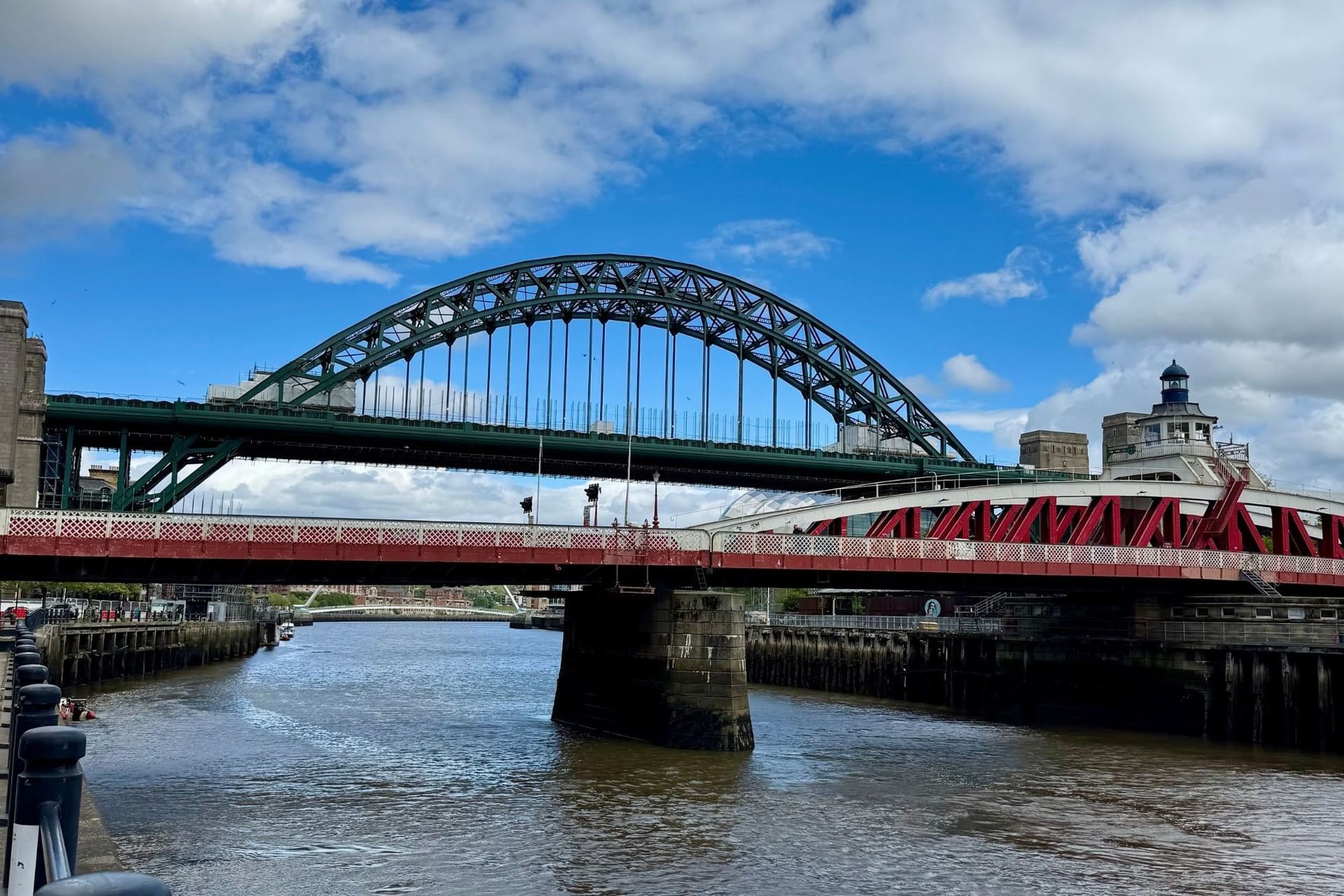
This suggestion might not be technically not hidden and I’m aware there are more further down the River Tyne. But seeing them up close differs immensely to seeing them from afar. I am talking about the bridges of Newcastle. If you travel north to Newcastle by train, ensure to peer out the right side window when you approach the Toon. What you’ll see is decades of manpower and magnificent: the seven bridges of Newcastle, connecting it to Gateshead.

Seeing the bridges from afar is only one thing—I implore you to walk from the Redheugh Bridge (1983) to the Gateshead Millenium Bridge (2001); the latter ‘winking-eye bridge’ is the world’s first to tilt. On your route, you will pass beneath the Edward VII Railway Bridge (1903); the Metro-carrying Elizabeth II Bridge (1981); the High Level Bridge (1849), definitely worth walking across; Lord Armstrong’s innovative Swing Bridge (1876); and the staple Tyne Bridge (1928), which unsurprisingly has the same designed as the Sydney Harbour Bridge (1932).

There are pubs and eateries aplenty on route—especially upon reaching your final destination: The Quayside. But do be sure to walk beneath and, where you can, across the bridges, so as to properly inhale their elegant engineering and feel decades of footprints.